On this page
If you have started reading about the UAE's e-invoicing mandate, you have probably noticed there is no single go-live date. Instead there is a phased rollout with several confirmed milestones, each with a different deadline and a different set of businesses in scope. Getting the sequence right matters, because the earliest deadline is an appointment deadline, not a usage deadline, and treating the two the same is the most common way businesses lose the lead time they actually have.
This post lays out what is confirmed today, in order, without speculating about anything that has not been published.
The model: PINT-AE on a Peppol 5-corner structure
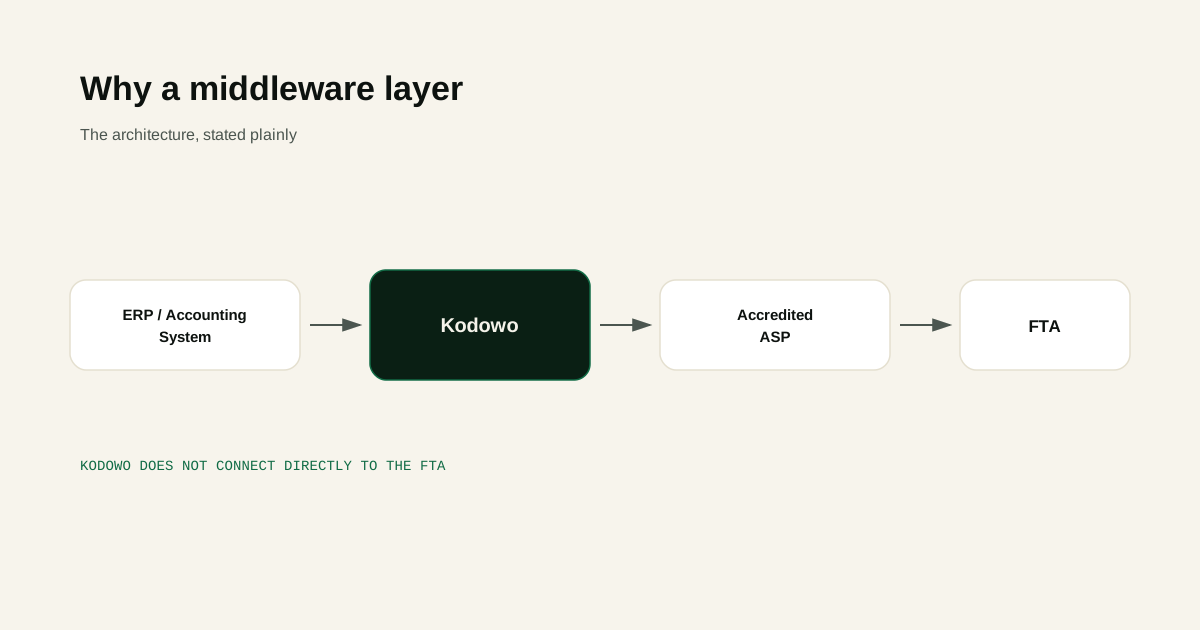
The UAE's e-invoicing framework is built on PINT-AE, the UAE-specific implementation of the international Peppol invoice standard, running on a 5-corner DCTCE model. In plain terms: your business does not send invoice data directly to the government. Instead, invoices move through Access Service Providers (ASPs), accredited intermediaries that handle the actual submission to the Federal Tax Authority (FTA) on your behalf.
That structure is exactly why a middleware layer like Kodowo exists between a business's own systems and its accredited ASP. Kodowo is not itself an ASP and does not connect directly to the FTA. It sits one step earlier: normalizing, validating, and mapping invoice data into the PINT-AE structure your accredited ASP requires, so what reaches the ASP is already correct.
The confirmed timeline
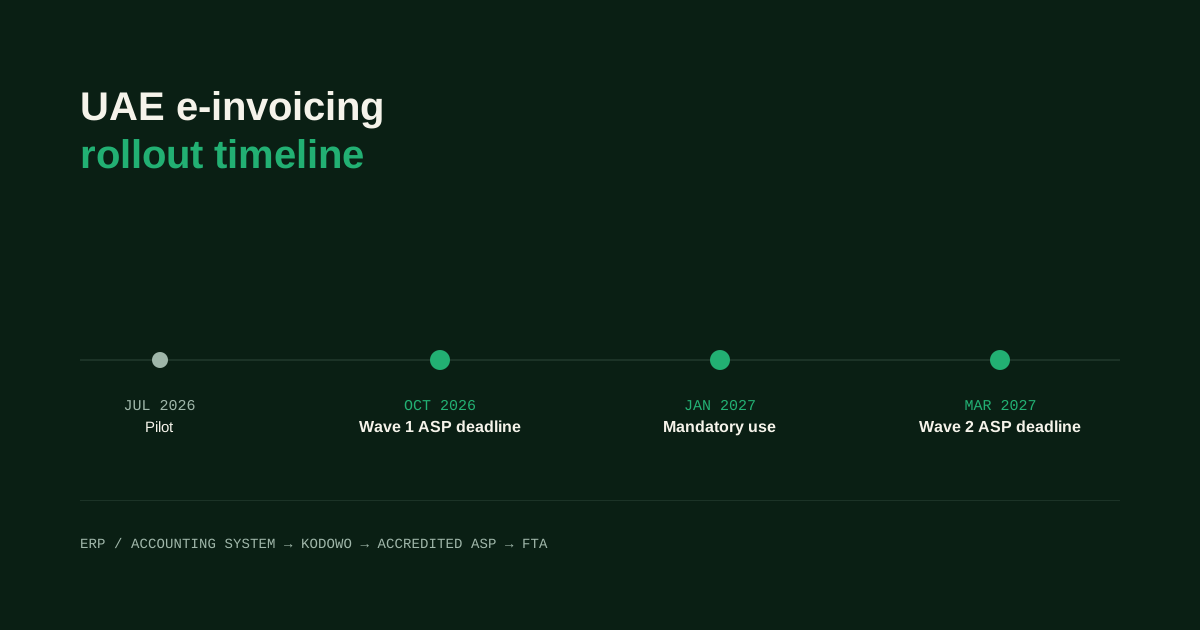
Five milestones are confirmed for the UAE mandate today.
Pilot phase, from July 1, 2026. The pilot phase is voluntary participation ahead of the first hard deadline. It exists for businesses and ASPs to test the submission and clearance flow before it becomes mandatory for anyone.
Wave 1 ASP appointment deadline, October 30, 2026. This is the first hard deadline, and it is an appointment deadline, not a usage deadline. Enterprises with revenue of AED 50 million or more must have appointed an accredited Access Service Provider by this date. You do not need to be live and submitting invoices by October 30, 2026. You need to have your ASP relationship in place.
Mandatory e-invoicing use, January 1, 2027. This is the date e-invoicing becomes mandatory for all businesses in scope, not just the Wave 1 cohort. By this point your invoice data needs to actually be flowing through your ASP and clearing the FTA, not just contractually arranged.
Wave 2 ASP appointment deadline, March 31, 2027. The same appointment-first mechanism repeats for the Wave 2 cohort: businesses in Wave 2 scope must have an accredited ASP appointed by this date, ahead of their own mandatory-use date.
Wave 2, July 2027. The second wave of the mandate. The exact scope for Wave 2 has not been published in the same level of detail as Wave 1, so we are deliberately not speculating about which businesses fall into it here.
Why the appointment deadline matters more than people think
The gap between the Wave 1 ASP appointment deadline (October 30, 2026) and mandatory use (January 1, 2027) is roughly nine weeks. That sounds like a reasonable buffer until you account for what actually has to happen inside that window: your ASP relationship needs to be live, your invoice data needs to be reaching them in the structure they require, and your internal team needs to have seen real invoices clear (or fail, and be fixed) before the mandatory-use date arrives.
Appointing an ASP on October 29 technically meets the deadline. It does not leave you meaningful time to discover that your invoice data does not map cleanly to the PINT-AE structure, or that your ERP export has fields your ASP cannot parse. That discovery work is exactly what a middleware layer is for: doing the normalization and validation before the mandatory-use date is the difference between finding problems in a controlled test and finding them in a live clearance queue.
What "in scope" and "not in scope" businesses should each be doing now
If your business is in Wave 1 scope (AED 50 million or more in revenue), the October 30, 2026 ASP appointment deadline is the number to plan backward from. Give yourself real time before it, not just up to it, to get invoice data flowing correctly.
If you are not yet sure which wave applies to you, or your revenue is below the Wave 1 threshold, the January 1, 2027 mandatory-use date and the Wave 2 dates above are still worth tracking now. A phased mandate rewards businesses that start early, quietly, well before their own deadline is the closest one on the calendar.
The bottom line
Three dates to hold onto: October 30, 2026 for Wave 1 ASP appointment, January 1, 2027 for mandatory use across all in-scope businesses, and March 31, 2027 for Wave 2 ASP appointment. Everything else, including the exact scope of Wave 2, is still to be confirmed, and we will not pad this timeline with guesses just to make it look more complete than it is.